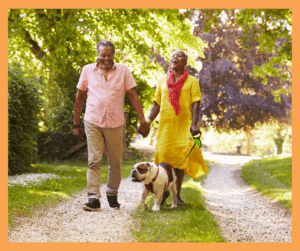
Pets! They’re cute. They’re cuddly. Plus, they have a positive impact on human health! More specifically, there is a demonstrated link between human-animal interaction and healthy aging.
One of the most significant perks is the increase in physical activity. Dog owners, in particular, tend to walk more frequently, which helps improve mobility, cardiovascular health, and balance. Regular walks and play sessions not only encourage movement but also boost time spent outdoors, which has been linked to improved mood and vitamin D levels.
Owning a pet may also have a calming physiologic effect. Studies show that older adults with pets tend to have lower blood pressure, cholesterol, and triglyceride levels than those without.
Companionship from a pet can significantly reduce feelings of loneliness and isolation, which are common concerns for seniors, especially those living alone. Interacting with animals has also been shown to ease anxiety, reduce symptoms of PTSD, and provide daily structure and a sense of purpose.
Pet ownership also fosters social interaction, outside on walks, at vet visits, and even conversations with fellow pet lovers online can create more opportunities to connect with others. Some research suggests that older adults with pets may experience better cognitive function, possibly due to the mental stimulation and routines that caring for a pet involves.
If you are considering pet adoption or purchase, take the time to carefully identify the right kind of pet for your health, mobility, available time, and other important resources. A vet or shelter employee can be a great resource on that front!
Whether it’s a purring cat to sit by your side, a playful pup to keep you active or even a chirping bird, pets offer comfort, connection and motivation—qualities that are essential for living longer, healthier, and happier lives as we age.
Sources: National Council on Aging, NIH.gov